
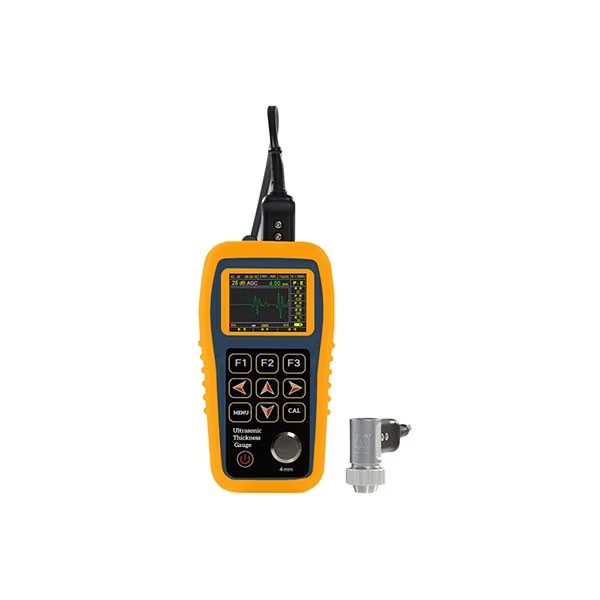
Applications
Suitable for thickness measurement of metallic and selected non-metallic materials (ceramics, glass, plastics, etc.) with through-coating measurement capability- no surface preparation required.
Key Advantages
1. Reliable Measurement Results – High-precision, anti-interference timing method for pulse-echo and secondary echo acquisition; innovative air zeroing with three calibration modes; V-path correction automatically compensates for sound path errors caused by dual-element probe transmitter/receiver separation – faster and more reliable results.
2. Compact, Lightweight & Easy to Operate – Large-size color LCD (320×240 resolution) for clear display and intuitive reading; handheld design, small footprint, only 275g (with batteries) – fits in pocket or toolbox; 10 preset channels for quick recall.
3. Rich Measurement Functions – Multiple working modes: standard, min/max capture with averaging, high/low thickness limits, differential/ratio mode, waveform mode, B-scan mode; E-E measurement for through-coating thickness – no surface preparation required. Full-wave function supports dual-element probe flaw detection.
4. Three Display Modes – Traditional digital display, A-scan and B-scan to meet various inspection needs.
5. Large-capacity Data Storage & Management – 128,000-point modular storage management; color-coded display for values exceeding thresholds (on PC); 250 A-scan or B-scan storage. All data can be uploaded to PC via USB port, with standard data communication software for further modular management and analysis.
Typical Applications
· Metallurgy – Plate and pipe wall thickness inspection;
· Machinery Manufacturing – Component thickness measurement and quality control;
· Power Industry – Boiler and pipeline wall thickness corrosion monitoring;
· Chemical Industry – Pressure vessel and storage tank wall thickness inspection;
· Marine Industry – Hull plate thickness measurement and corrosion assessment;
· Petroleum Industry – Oil and gas pipeline wall thickness inspection and in-service corrosion monitoring;
· Bridge & Steel Structure – Thickness acceptance of bridge steel structures, fatigue thinning detection in steel box girder weld areas, and safety assessment.